
How Many Kilojoules in a Banana, Apple, and Egg? (Everyday Food Guide)
You walk into the supermarket, grab a protein bar off the shelf, and flip it over. Right there on the shiny wrapper is a neat, legally mandated nutrition label telling you exactly how much energy you are about to consume. Tracking packaged food is incredibly easy.
But what happens when you hit the produce aisle?
Whole, unprocessed foods do not come with barcodes or convenient nutrition panels. Mother Nature does not print kilojoule counts on the side of a cucumber. For anyone trying to monitor their daily energy intake, this creates a frustrating “no label” dilemma. You know that eating fresh fruit, vegetables, and lean proteins is essential for your health, but logging them into your fitness app often feels like a guessing game.
Nobody wants to carry a digital food scale into the office breakroom just to eat a piece of fruit. You need a reliable, mental baseline for the foods you eat every single day.
In this comprehensive guide, we will answer your most common whole-food questions—including exactly how many kilojoules in a banana, apple, and egg—and provide a highly scannable, bookmarkable cheat sheet for your daily diet.
The “No Label” Dilemma: Tracking Whole Foods
If you are using the metric system to track your health goals, you already know that your body requires a specific daily budget of kilojoules (kJ) to maintain, lose, or gain weight.
When you start eating a diet rich in whole foods, tracking that budget requires a bit of foundational knowledge. The major health databases of the world, such as the United States Department of Agriculture (USDA) FoodData Central and Food Standards Australia New Zealand (FSANZ), spend millions of dollars testing the exact nutritional profiles of agricultural products.
They analyze thousands of apples, chicken breasts, and potatoes to give us highly accurate average energy counts.
While a giant apple obviously contains more energy than a tiny one, relying on standard “medium” averages works perfectly for 99% of diet plans. You do not need surgical precision to lose weight or stay healthy. You simply need consistency. By memorizing the kilojoule counts of a few staple items, you can confidently eyeball your meals and keep your daily tracking incredibly accurate without the headache.
The Morning Standard: How Many Kilojoules in an Egg?
Let us start with the ultimate breakfast staple. Eggs are a nutritional powerhouse, packed with high-quality protein, essential fats, and vital nutrients like choline and vitamin D. But when you are making a quick morning scramble, you need to know the energy impact.
So, exactly how many kilojoules in an egg?
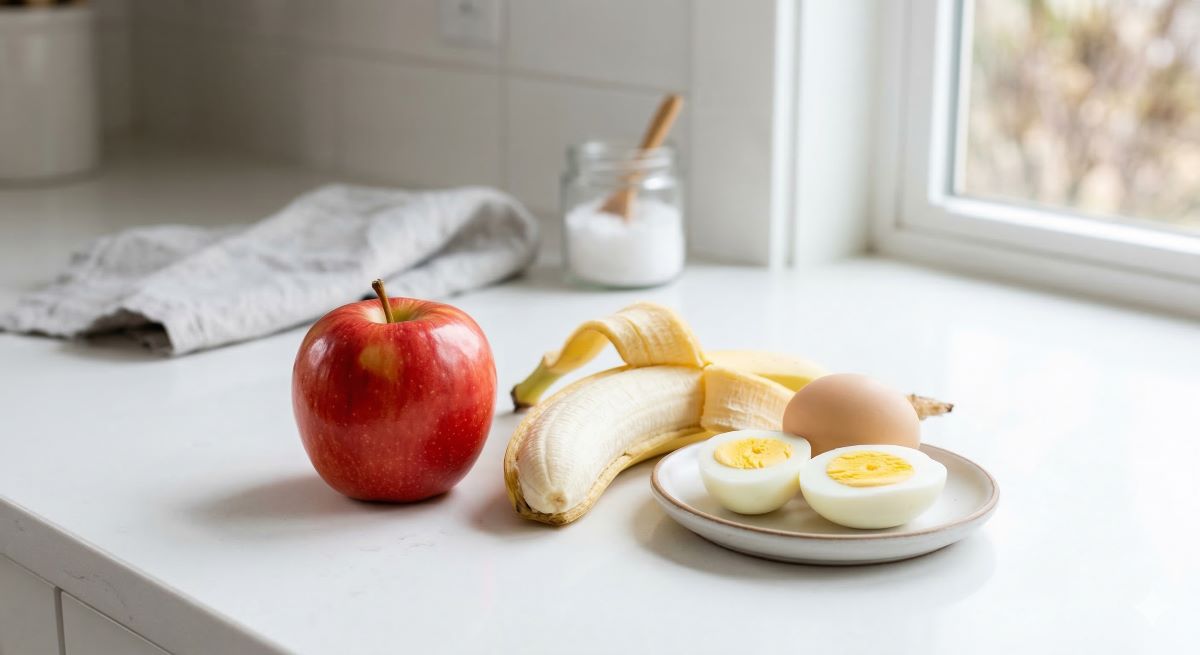
According to standardized nutritional databases, a standard large whole egg (weighing approximately 50 grams without the shell) contains roughly 300 to 320 kilojoules (72 to 77 Calories).
However, the way you construct your egg matters. An egg consists of two entirely different nutritional profiles:
- The Egg White: The white holds the majority of the protein and almost no fat. A single egg white contains only about 70 kJ (17 Calories).
- The Egg Yolk: The yolk holds the healthy fats, vitamins, and the bulk of the energy. A single egg yolk contains roughly 230 kJ (55 Calories).
Beware the Cooking Method
The 300 kJ benchmark only applies to a boiled or poached egg. The moment you introduce cooking oils or butter to the frying pan, the energy count changes drastically. Frying a single egg in one tablespoon of olive oil adds an additional 500 kJ to your breakfast plate. If you are strictly monitoring your kilojoule intake, always remember to track your cooking fats separately!
The Perfect Pre-Workout: How Many Kilojoules in a Banana?
Bananas are nature’s perfect pre-packaged snack. They come in their own biodegradable wrapper, they are inexpensive, and they provide a fantastic source of rapid-digesting carbohydrates, making them a favorite among runners and weightlifters.
If you grab one on your way out the door, how many kilojoules in a banana are you actually consuming?
A medium-sized banana (measuring about 7 to 8 inches in length and weighing roughly 118 grams) contains approximately 440 kilojoules (105 Calories).
Does Ripeness Change the Energy?
A common myth in the fitness world is that a heavily spotted, overripe banana contains more kilojoules than a firm, green one. This is completely false.
As a banana ripens on your kitchen counter, the total amount of energy inside the fruit does not magically increase. Instead, the complex starches inside the green banana slowly break down into simple sugars (fructose and glucose). This is why a brown banana tastes significantly sweeter and digests much faster.
While a ripe banana will spike your blood sugar faster—making it excellent for immediate workout energy—the total kilojoule count remains exactly the same.
The Afternoon Crunch: How Many Kilojoules in an Apple?
The classic apple is arguably the most popular portable snack in the world. High in water content and packed with dietary fiber (specifically pectin), apples do an incredible job of keeping you full and suppressing your appetite between meals.
When that 3:00 PM hunger hits at the office, how many kilojoules in an apple are you logging?
A standard medium-sized apple (weighing approximately 182 grams) contains roughly 395 to 400 kilojoules (95 Calories).
Does the Variety Matter?
Supermarkets offer a dizzying array of apple varieties today. You might wonder if a tart, green Granny Smith has fewer kilojoules than a massive, sweet Honeycrisp or a Fuji apple.
The short answer is: marginally, but not enough to matter.
Sweeter apples do contain slightly more natural sugar than tart apples, which nudges their kilojoule count up by a tiny fraction. However, the size of the apple dictates the energy far more than the color or variety. A giant Granny Smith will always contain more kilojoules than a tiny Honeycrisp. For daily tracking purposes, simply log 400 kJ for any standard, fist-sized apple you eat and move on with your day.
The Ultimate Whole Food Cheat Sheet
To make your life easier, we compiled the most common, barcode-free whole foods into a single, scannable table. We recommend bookmarking this page on your smartphone so you can pull it up quickly the next time you are preparing a meal or wandering through the produce aisle.
All numbers are based on standard, raw, medium-sized portions using USDA and FSANZ average data.
Fruits & Vegetables
| Food Item | Portion Size | Kilojoules (kJ) | Calories (kcal) |
| Banana | 1 Medium (118g) | 440 kJ | 105 kcal |
| Apple | 1 Medium (182g) | 400 kJ | 95 kcal |
| Orange | 1 Medium (131g) | 260 kJ | 62 kcal |
| Strawberries | 1 Cup, Halved (152g) | 205 kJ | 49 kcal |
| Avocado | Half, Medium (100g) | 670 kJ | 160 kcal |
| Broccoli | 1 Cup, Chopped (91g) | 130 kJ | 31 kcal |
| Spinach | 2 Cups, Raw (60g) | 58 kJ | 14 kcal |
| Carrot | 1 Medium, Raw (61g) | 105 kJ | 25 kcal |
| Potato (White) | 1 Medium, Raw (213g) | 675 kJ | 161 kcal |
Proteins & Fats
| Food Item | Portion Size | Kilojoules (kJ) | Calories (kcal) |
| Egg | 1 Large (50g) | 300 kJ | 72 kcal |
| Chicken Breast | 100g (Raw, Boneless) | 500 kJ | 120 kcal |
| Salmon (Atlantic) | 100g (Raw) | 870 kJ | 208 kcal |
| Almonds | Small Handful (30g) | 715 kJ | 170 kcal |
| Peanut Butter | 1 Tablespoon (16g) | 395 kJ | 94 kcal |
Note: Meat and poultry shrink during the cooking process as they lose water weight. We list raw weights here because it is the most accurate way to measure your food before throwing it in the pan.
Why Precision Matters Less Than You Think
When you start tracking whole foods, it is incredibly easy to fall into the trap of over-analyzing. You might find yourself staring at a strawberry, wondering if it is a “medium” or a “large” strawberry, terrified of logging the wrong number.
Take a deep breath. You do not need to be perfect.
Whole foods come with a built-in metabolic advantage known as the Thermic Effect of Food (TEF). Your body actually has to work much harder, and burn more energy, just to digest a high-fiber apple or a protein-dense egg compared to digesting a highly processed pastry.
Furthermore, naturally occurring fiber acts as a buffer in your digestive tract, meaning your body may not even absorb every single kilojoule listed in the table above.
When you replace heavily processed, barcoded snacks with fresh produce and lean proteins, the slight variations in size and kilojoule counts simply stop mattering. If you underestimate the size of your apple by 50 kilojoules, it will not ruin your diet or stall your weight loss.
Eyeball your portions, use the averages in our cheat sheet, and focus on the quality of your food rather than agonizing over exact mathematics.
Keep Tracking Simple: Use Our Tool
We built this guide to cover the most common items in your grocery basket, but the culinary world is vast. What happens when you decide to eat a kiwi, a slice of watermelon, or a handful of macadamia nuts?
If you stumble across a whole food or an imported snack that isn’t on this list, do not waste time searching the internet for complicated math formulas. We keep a sticky [kJ to Calories Converter Tool] running right on the sidebar of this post.
Whether you are using an American tracking app that demands Calories, or you just want a quick translation for a new recipe you found online, simply type your number into the sidebar tool. It instantly converts kilojoules to calories (and vice versa) so you can get back to cooking and eating without the headache.